Our current digital systems are optimized for engagement, power, and profit—not truth, collective wellbeing, or democratic values.
Social media algorithms are amplifying divisive content and polarization at an unprecedented rate, weakening democratic resilience in the process. What if we made platforms pay for the harms they produce?
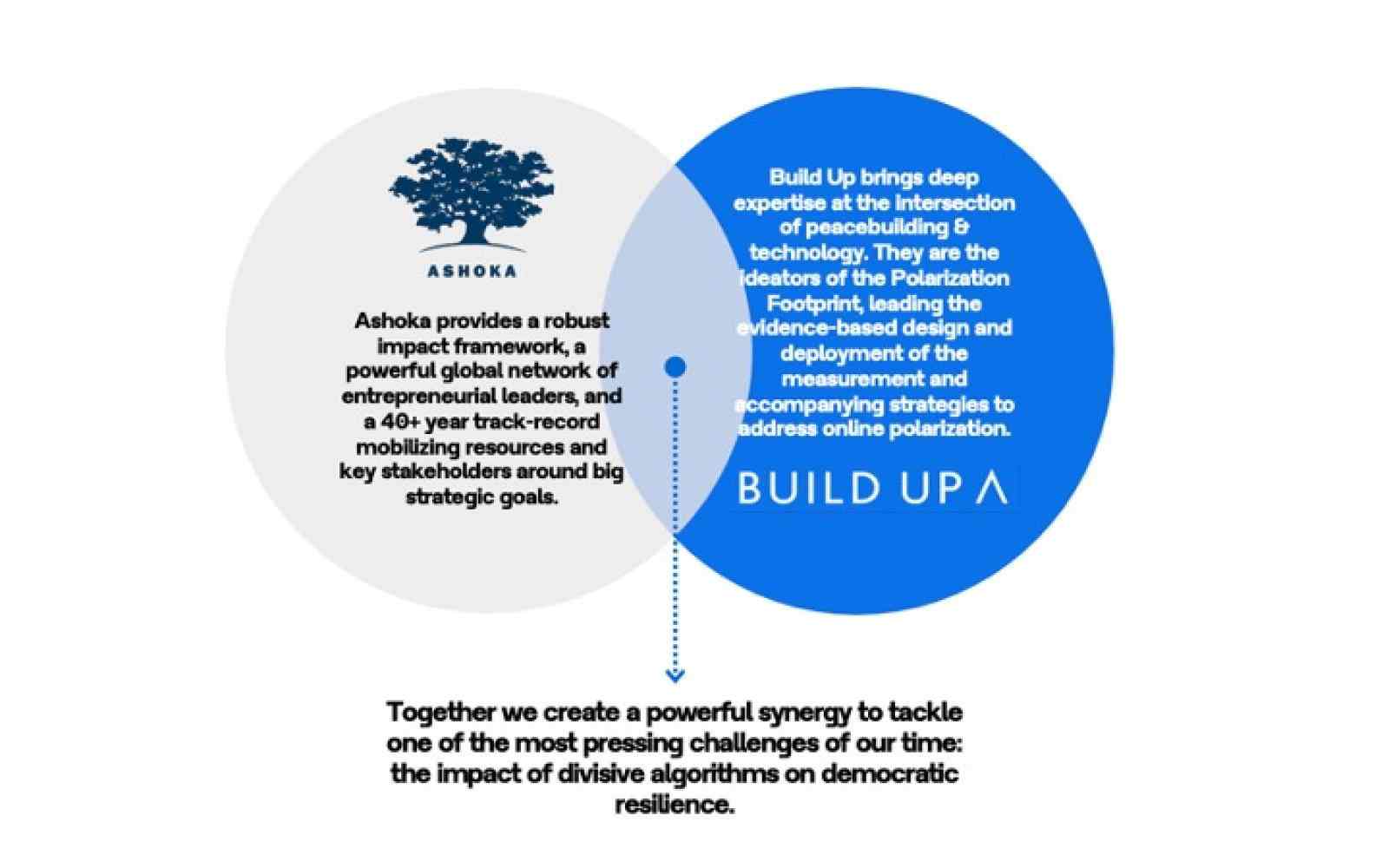
Since 2022, Ashoka’s Tech for Human Agency team has been supporting Fellow Helena Puig Larrauri, co-founder of Build-Up, in developing the Polarization Footprint - a practical tool to measure and reduce the polarizing impact of digital platforms.
WHAT THE DATA REVEALS
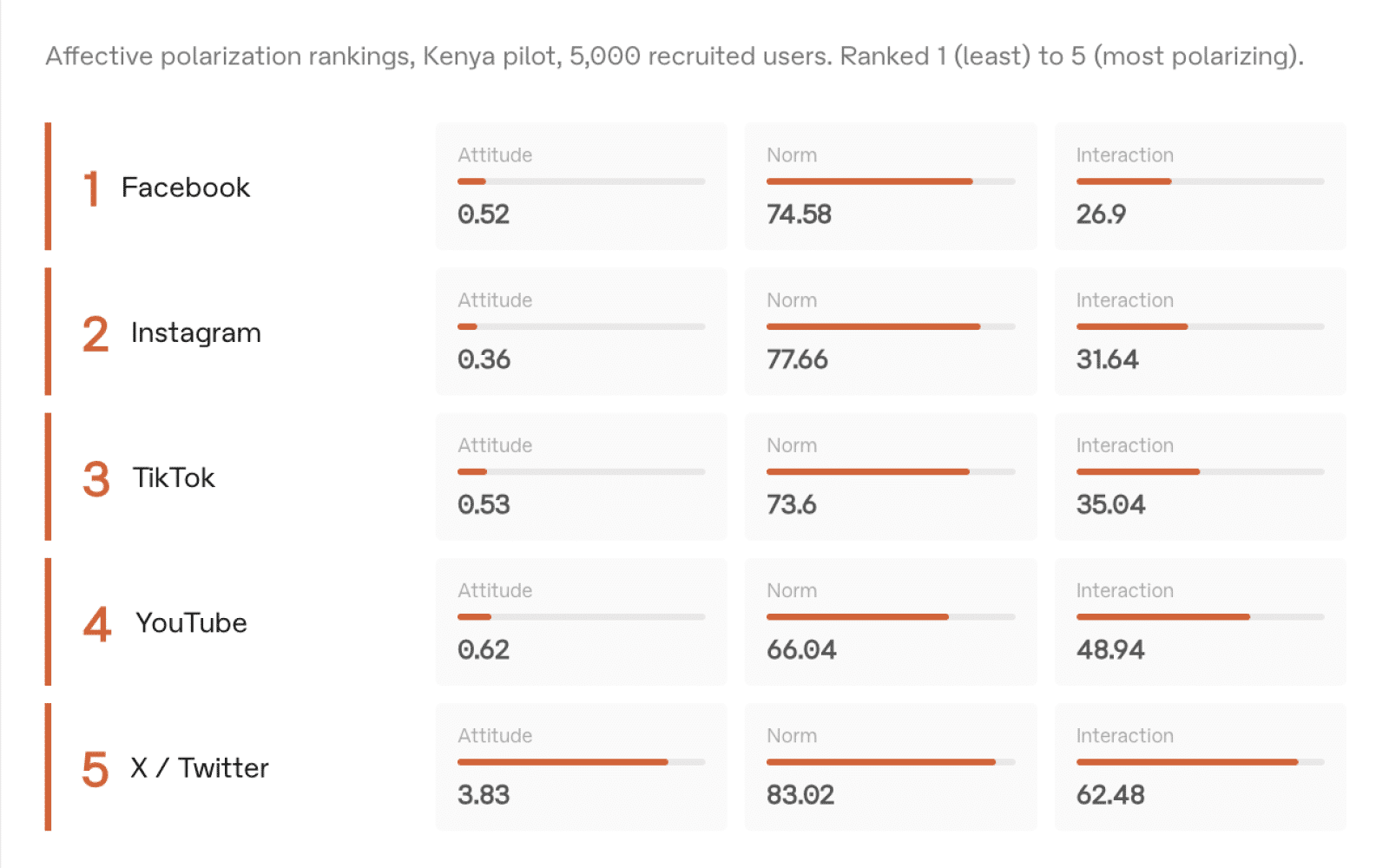
The first Polarization Footprint measurement study was completed in Kenya by Build Up in December 2025. Here are a few highlights:
5,000+ people were surveyed on 5 platforms (Facebook, X, TikTok, Youtube, Instagram)
X/Twitter is the most polarizing by far and Facebook the least. Ranked from best to worst: 1. Facebook, 2. Instagram, 3. TikTok, 4. Youtube, 5. X/Twitter
An average Kenyan spends up to 21 minutes per day reading polarizing content. Imagine being shouted at for 21 minutes every day!
On all platforms, the vast majority of "by-standers" don't stand up to polarizing comments.
The National Coalition on Freedom of Expression and Content Moderation in Kenya (FECoMo) is a key partner helping to bring the measurement into Kenya's policy realm, as well as spearheading conversations with platforms (starting with TikTok).
WHAT'S NEXT
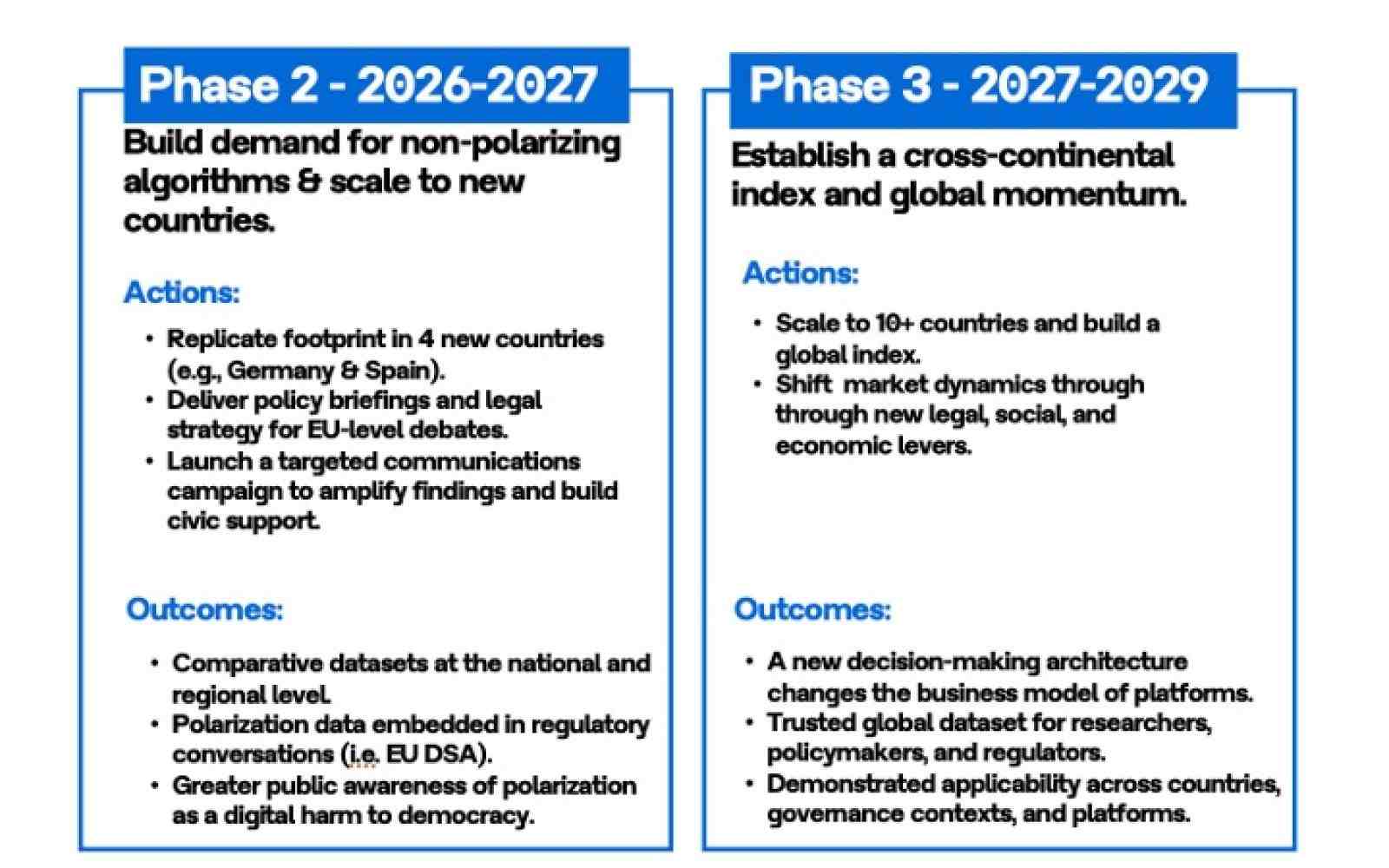
Now that the foundation to measure and address algorithmic polarization is set, it's critical to build demand for non-polarizing algorithms and to replicate the work to new geographies.
Europe is a strong contender for replication given its appetite for tech regulation. To that end, in 2025, Ashoka’s Brussels-based Participation Hub partnered with Build Up on bringing the Polarization Footprint to policy circles in Brussels, leading to an EU policy paper, a strengthening web of relationships to policy-makers and allies, and a roadmap for using the polarization footprint as an implementation tool within legal framework of the Digital Services Act. In addition, the Build Up team has been invited as an advisor to the Spanish Prime Minister's office to help them develop their own "hate and polarization footprint" - a major opportunity to shape the first EU member's attempt to make platforms accountable for the toxicity of their algorithms.
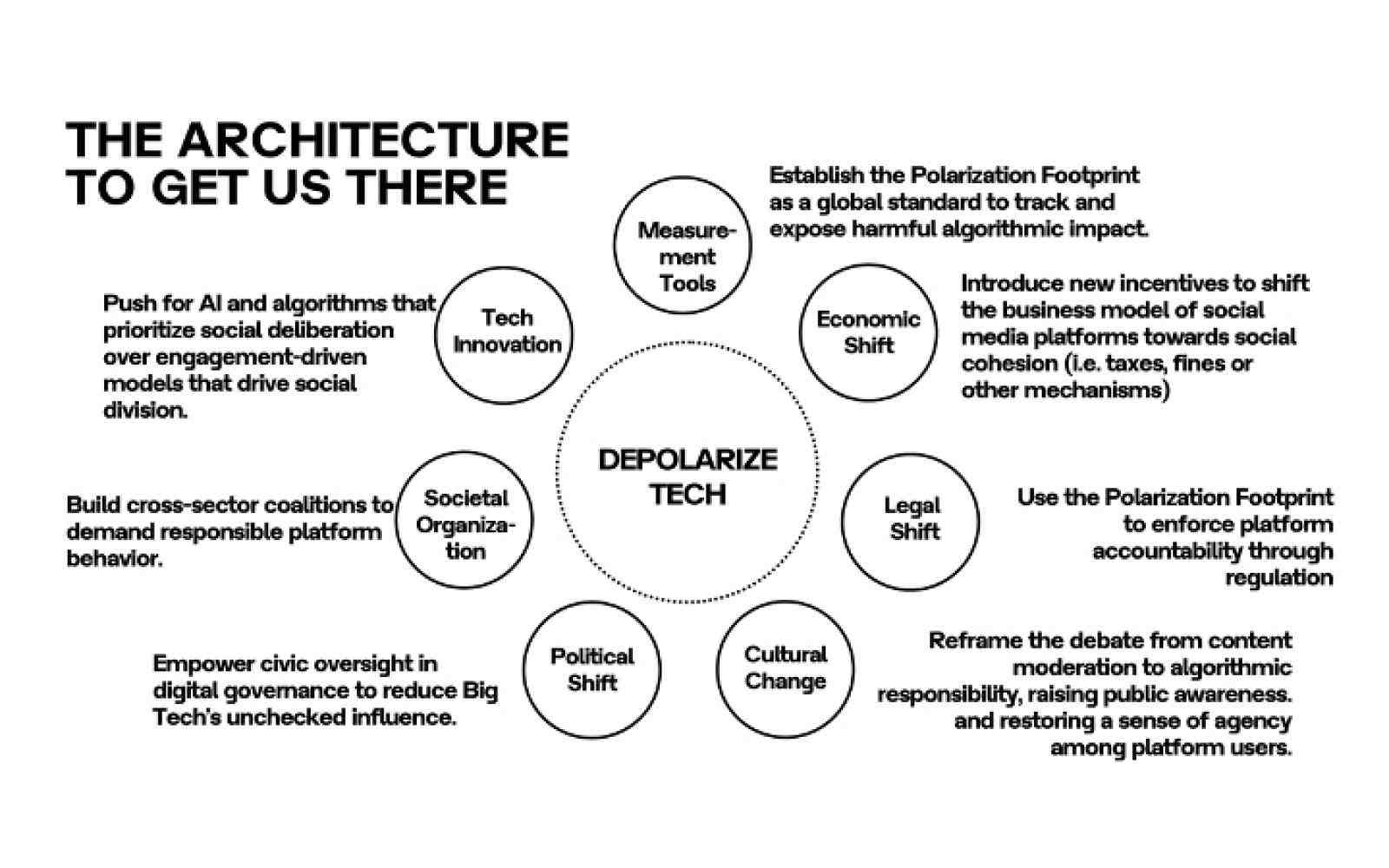
Replicating this to 4 new geographies in the next 2 years is priority #1. With comparative datasets at national and regional levels, it will become easier to embed the measurement regulatory conversations and to build public backing for real change. We need a new decision-making architecture that changes the business model of platforms. A trusted global dataset for researchers, policymakers, and regulators is a key piece of that architecture.
JOIN US
Do you want to bring the polarization footprint to your country? Do you want to help fund its deployment? Are you building another piece of this critical architecture to depolarize our tech environment?
Together, let's depolarize tech and bring the Polarization Footprint to the world.